
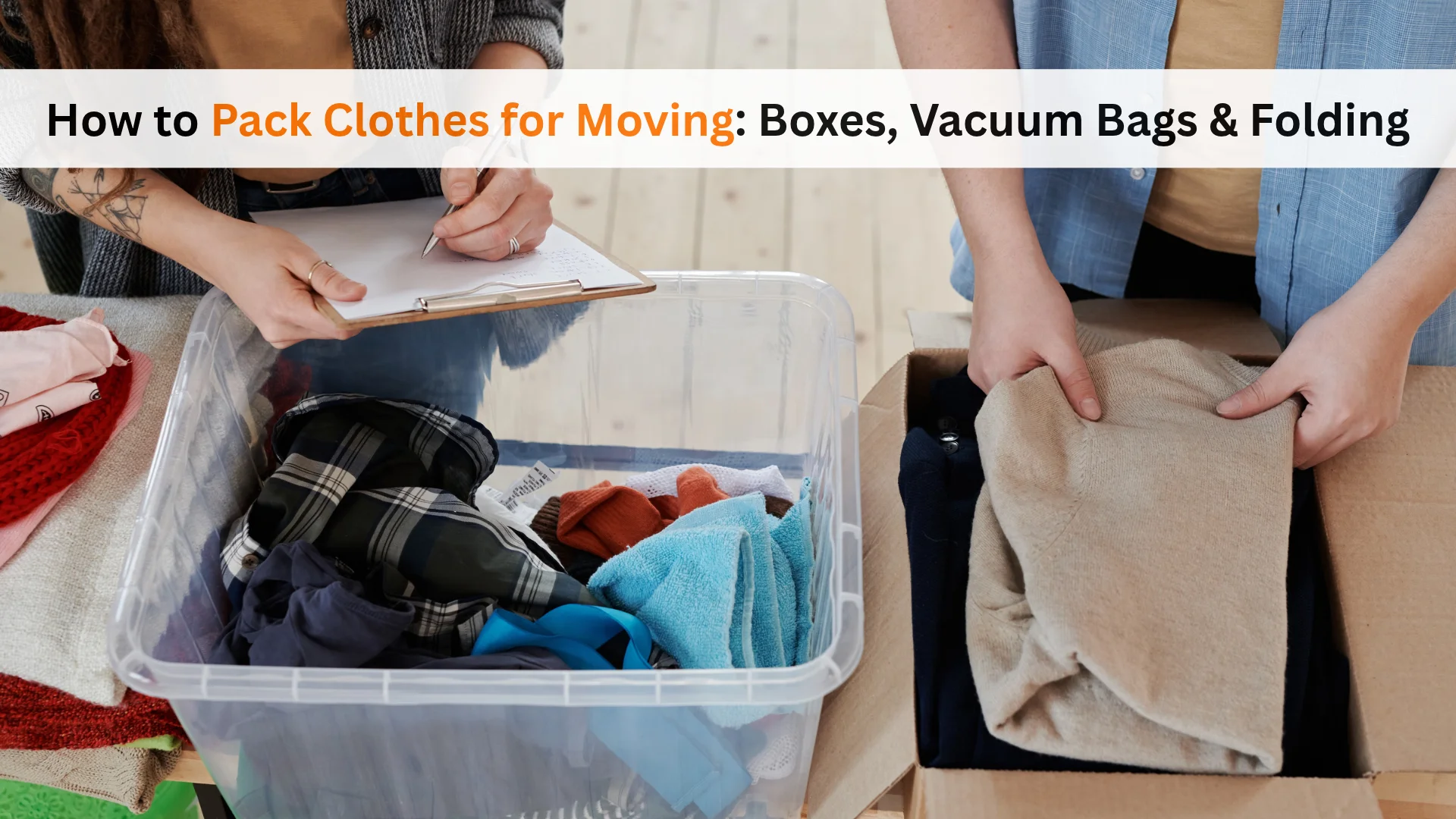
The best way to pack clothes for a move is to sort them by how they travel. Anything that hangs goes in a wardrobe box, everyday folded clothes go in small boxes or suitcases, and bulky synthetic items go in vacuum bags. Delicate fabrics like wool, down, silk and leather skip the vacuum bag, because they need air. Get that split right and you’ll pack faster, use fewer boxes and skip the ironing marathon at your new place.
Below: a cheat sheet you can tape to the closet door, the math for how many wardrobe boxes you need, a fabric-by-fabric vacuum bag guide, and the part most moving guides skip, which is how to load clothing into a portable storage container so it comes out wearable.
The Cheat Sheet: Match Each Type of Clothing to a Container
Print this. Seriously. Most packing mistakes come from using the wrong container for the wrong garment.
| What you’re packing | Best container | Why it works |
|---|---|---|
| Suits, dresses, blazers, silk blouses | Wardrobe box | No folding, no creases, straight from closet to box. |
| Everyday work shirts and jackets | Wardrobe box (or trash bags for a short local move) | Stay on hangers, save you from re-ironing. |
| Tees, jeans, knitwear, activewear | Small or medium box, rolled or folded | Takes less room than hanging and fills gaps. |
| Fleece, synthetic jackets, spare bedding | Vacuum bag | Big space savings on bulky, forgiving fabrics. |
| Wool, cashmere, down, leather, fur | Breathable cotton bag inside a box | These fibers need airflow to hold their shape. |
| Underwear, pajamas, one work outfit | Suitcase (your go-bag) | You’ll need them the first night. Don’t bury them. |
| Shoes | Original box or a small box, stuffed with socks | Keeps the shape and stops crushing. |
Sort Into Four Piles Before You Touch a Box
Everyone tells you to purge first, and they’re right. But “keep or donate” only gets you halfway. Once the donate bag is by the door, sort what’s left by how it’s going to travel:
- Hang: dresses, suits, blazers, good work shirts. Anything that wrinkles if you look at it funny.
- Fold or roll: tees, jeans, knits, pajamas, activewear. This is most of your closet, honestly.
- Squash: bulky off-season stuff you won’t touch for months, like fleece and spare bedding.
- Keep close: three days of clothes, a work outfit, and anything you can’t replace.
Wash everything before it goes in a box. Stains set after a few weeks in the dark, and the last thing you want after moving day is a mountain of laundry. Check pockets while you’re at it.
Not sure what to cut? Try the hanger flip. Turn every hanger backward, then flip it the right way round each time you wear something. Give it a week or two. Whatever’s still backward is what you’re not wearing. It’s a cheap trick and it works.
Every garment you cut is one less thing to box, lift and pay to store. And if you’re renting portable storage, a smaller pile of clothes can be the difference between needing two containers and needing three.
Wardrobe Boxes: How Many You Need and the Weight Trap
Grab a tape measure and run it along your closet rod. A standard small wardrobe box, 24″ × 24″ × 34″, gives you about two feet of hanging space and tops out around 80 pounds. So every two feet of packed hangers needs roughly one box. Four feet of clothes? Two boxes. A walk-in with 14 feet of rod? Seven. Do the math before you buy, because running out halfway through is a miserable way to spend a Tuesday night.
A few things that make wardrobe boxes work the way they should:
- Weigh down the floor first. Put shoes, belts or a folded towel in the bottom before you hang anything. A top-heavy box tips.
- Point every hanger hook the same way. It makes lifting clothes out at the other end a ten-second job instead of a tangle.
- Don’t jam it. Clothes packed shoulder to shoulder crease where they touch. Leave a finger of space between pieces.
- Watch the weight. Winter coats and leather jackets add up fast. If you can’t lift the box comfortably, pull a few coats and put them in a regular box.
- Slip tissue paper over anything silky or beaded before you close the flaps.
- Label it twice: “HANG – Master closet – open first” on the front and the top.
The Budget Version: Trash Bags
Short, local move, clothes you wouldn’t cry over? Slide a large drawstring bag up over a bunch of hangers, pull the hooks through the top and knot it. It works. But skip it for good coats, dresses, or anything that will sit for more than a few weeks. Thin plastic traps moisture and rips, usually at the worst possible moment.
When Wardrobe Boxes Are Overkill
They cost more than regular boxes and take up real space. T-shirts and jeans don’t need one. Save wardrobe boxes for the pieces that would genuinely suffer from being folded.
Fold or Roll? Pick by Fabric, Not by Internet Loyalty
People argue about this like it’s politics. The truth is boring: both win, depending on what you’re packing.
- Roll tees, jeans, leggings and activewear. Lay it flat, tuck the sleeves in, roll tight from the hem. Soft fabrics barely crease and rolls fill every gap in a suitcase.
- File-fold button-downs, polos and sweaters. Fold into a neat rectangle, then stand each piece on its edge in the box, like files in a drawer. You can see everything without digging.
- Flat-fold, don’t roll, anything headed for a vacuum bag. Rolls compress unevenly and come out lumpy.
- Layer tissue between silk, satin and anything with beading or sequins.
Whatever you pick, pack small. Use small or medium boxes, because a giant box of jeans is a back injury waiting to happen. Put denim and sweaters on the bottom, tees and underwear on top. A medium moving box (18″ × 18″ × 16″) is about the right size for clothes, and Big Box delivers packing supplies with your container at no extra delivery charge.
Label by category, not just room. “Tees & shorts, bedroom 2” beats “Bedroom stuff” every single time.
Vacuum Bags: Great Space Savers, Terrible for the Clothes You Love
A good vacuum bag can shrink a pile of fleece and bedding to a fraction of its size. That’s the pitch, and it’s true. The catch: compression and no airflow are rough on natural fibers. Down, feather-filled items, leather, silk and lace are the usual troublemakers, and breathable cotton or wool bags are the safer pick for delicate clothing.
| Go ahead and compress | Keep out of the vacuum bag |
|---|---|
| Fleece and polyester sweaters | Down jackets and duvets |
| Cotton tees and sweatshirts (short-term) | Wool and cashmere |
| Synthetic-fill comforters and pillows | Silk, satin and lace |
| Towels, sheets and blankets | Leather, suede and fur |
| Kids’ outgrown clothes | Structured blazers and suits |
| Seasonal basics like swimwear or shorts | Anything beaded, sequined or embellished |
How to use them without regrets:
- Everything goes in clean and completely dry. Moisture sealed inside is how you get mildew.
- Flat-fold, don’t roll.
- Don’t overfill. A bag stuffed past the line won’t seal properly.
- Put the sealed bag inside a box or bin. Stacked weight and sharp corners are the top reasons valves fail.
- Check the bag again after a day. A slow leak leaves you with a half-flat, wrinkled mess.
- Treat them as a months-long solution, not a years-long one. If clothes will sit a long time, switch to breathable storage.
Loading Clothes Into a Portable Storage Container
Almost every packing guide assumes a moving truck and a three-day timeline. A portable container is different. Your clothes might sit in it for weeks or months, so how you load matters as much as how you pack. Here’s what works:
- Heavy first, clothes second. Furniture and book boxes go on the floor and against the back wall. Clothing boxes go in the middle and upper layers.
- Stand wardrobe boxes upright against a side wall and tie them off with rope so they can’t tip.
- Never stack heavy stuff on a wardrobe box. Cardboard crushes. Your suits crush with it.
- Use soft clothing as padding. Tuck folded sweaters between a mirror and the wall, or around a lamp.
- Put clothing boxes near the door if you’ll swap seasons mid-storage. You’ll thank yourself.
- Fight moisture. Add dryer sheets or lavender sachets. Skip cedar for leather and fur, because it can dry them out.
- Lock it. A padlock takes ten seconds and ends the worrying.
One more thing. A Big Box has a 2,000-pound weight limit. Clothes won’t get anywhere near it, but books, tools and appliances will. Spread the heavy stuff out and you’ll be fine.

A Clothes-Packing Timeline That Won’t Wreck Your Week
- Four weeks out: purge, donate, run the hanger flip, and start washing.
- Three weeks out: pack off-season clothes and special-occasion outfits. Vacuum bags for synthetics, tissue and boxes for everything else.
- Two weeks out: pack shoes and accessories. Move formalwear into wardrobe boxes.
- One week out: build your go-bag. Set up a dirty-laundry basket for the final week.
- Two days out: pack everyday hanging clothes in wardrobe boxes. Bundle empty hangers with a rubber band so they don’t turn into a tangled mess.
- The day before: run the last load, finish the go-bag, and keep jewelry, IDs and important papers with you. Not in the container.
Your go-bag is the one thing that doesn’t get loaded. Three days of clothes, pajamas, a work outfit, a towel and chargers. Done.
Moving in San Diego? Let the Container Come to Your Closet
Packing clothes is only half the job. The other half is getting them somewhere safe without renting a truck, lugging boxes and burning a weekend. That’s what we do. Big Box delivers a container to your driveway, you load it at your own pace (hours, days or weeks), and then it either stays on site or we pick it up and store it at our indoor facility. Here’s exactly how it works.
- $99 round-trip delivery in the standard service area, and free initial delivery if you commit to 4 months or more.
- $99 per box per month, or $89 with a 12-month term. You only pay for the boxes you actually use.
- Packing supplies delivered free with your container, so the boxes are waiting when your Big Box arrives.
- Climate control options at our facility for delicate wardrobes, plus access seven days a week.
Swapping wardrobes with the seasons? Our seasonal storage packages let you store for just a few months, no 12-month lease. Voted San Diego’s Best Storage Company five years in a row, and we’d like to earn your closet too.
Ready to book? See current rates and promos, or call us at 858-244-2691.
What to Do This Week
Don’t start by buying boxes. Start with a tape measure and your closet rod, because that one number tells you how many wardrobe boxes you need. Then make your four piles and wash what’s staying.
And here’s my firm opinion: skip trash bags for anything you’d be upset to lose. A wardrobe box costs about the price of a sandwich. Your good coat doesn’t.
Frequently Asked Questions
What is the best way to pack clothes for a move?
Sort clothes by how they travel. Hanging pieces like suits, dresses and work shirts go in wardrobe boxes. Everyday clothes get rolled or folded into small or medium boxes and suitcases. Bulky synthetic items can go in vacuum bags. Keep wool, down, silk and leather out of vacuum bags. Wash everything first, and pack a separate bag with three days of clothes.
Is it better to fold or roll clothes when moving?
Roll soft fabrics like tees, jeans, knits and activewear because rolls save space and rarely crease. Fold structured pieces like button-downs and sweaters, and stand them upright in the box. If you’re using vacuum bags, flat-fold instead of rolling, since rolled clothes compress unevenly and come out lumpy.
How many wardrobe boxes do I need for a move?
Measure your closet rod. A standard small wardrobe box (24″ × 24″ × 34″) holds about two feet of hanging clothes, so every two feet of packed hangers needs roughly one box. A four-foot rod needs two boxes. Heavy coats and leather jackets can push you toward a few extra boxes, because overloading is the fastest way to crush the bottom of a wardrobe box.
Do vacuum bags ruin clothes?
Not if you use them on the right things for a limited time. Fleece, cotton, polyester and synthetic-fill bedding handle compression well. Down, feather, wool, cashmere, silk, lace and leather don’t, because they need air to keep their shape. Make sure everything is clean and fully dry before sealing, since trapped moisture can cause mildew.
How much space do clothes take up in a storage container?
It depends on how you pack. Wardrobe boxes are tall and narrow, while folded clothes in medium boxes stack tightly. One Big Box measures 8′ × 5′ × 7′ and typically holds a room’s worth of belongings, so a full closet usually takes up a modest corner. To size it for your whole move, try the Big Box storage space estimator.