
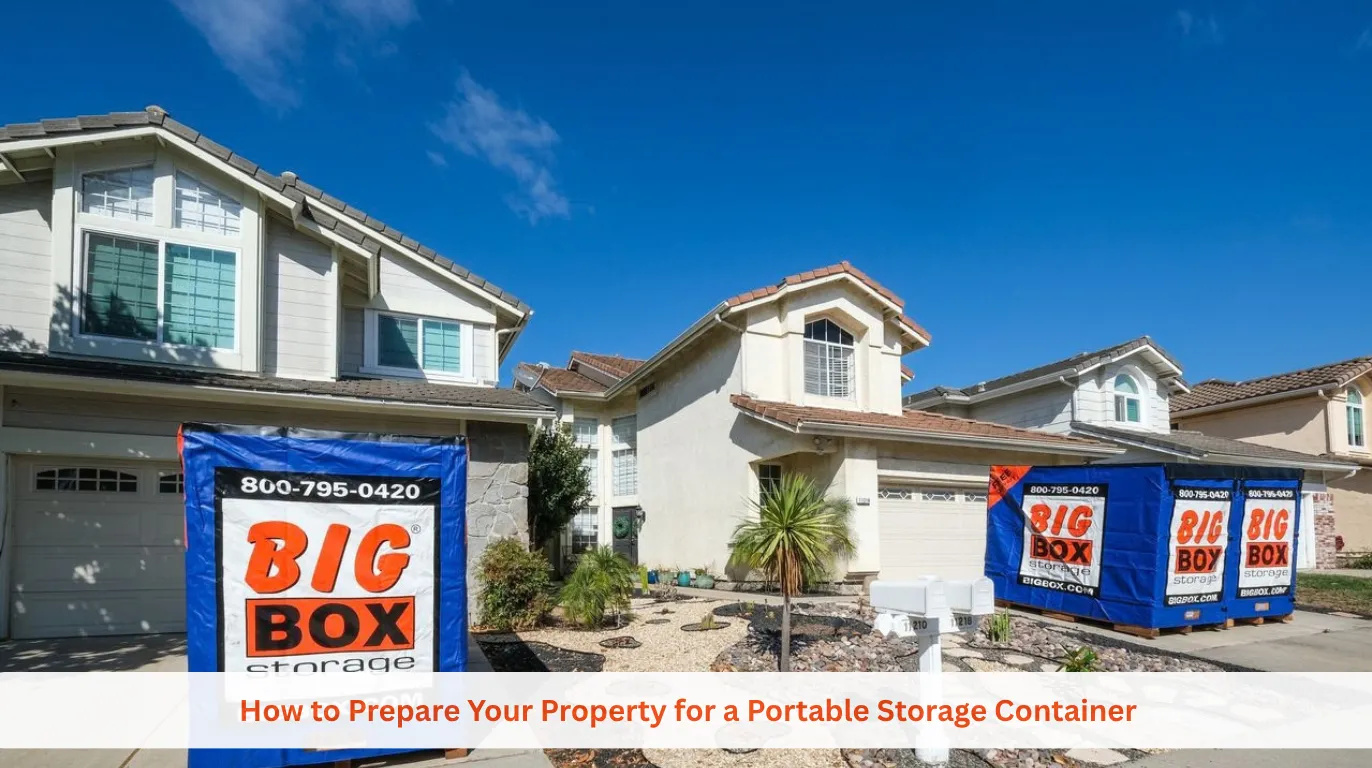
Honestly, most delivery-day problems have little to do with the container itself. They usually come from a vehicle parked in the wrong place, a driveway that’s narrower than anyone originally realized, or a tree branch nobody noticed until the truck arrived. A modest amount of preparation during the week before delivery resolves nearly all of these complications. Whether you’re relocating, renovating, or simply clearing out the garage, getting your property ready for a portable storage container take approximately an hour.
Here’s the good news: at Big Box Storage, delivery is designed to be easier than what most providers offer, and the guiding rule is simple: if a car can go there, our storage unit can go there. So even if your property feels tight, the preparation is usually quick, straightforward, and manageable.
Where Should You Place a Portable Storage Container?
Start by choosing the right spot, because nearly every other decision depends on it, so think carefully about how you plan to use the container, since that determines the best location. If you’re packing for a move, you’ll want it close to the house, so you aren’t carrying heavy boxes across the entire yard. If it’s for a renovation, place it where contractors can work freely while you still have convenient access.
What Surface Works Best for a Portable Storage Container?
The ideal placement is a flat, firm, and level surface. Concrete and asphalt handle the weight extremely well, and compacted gravel is generally acceptable as an alternative. Avoid soft dirt, saturated grass, and steep slopes, since a heavy container can sink or shift on unstable ground. If your yard is uneven, mention it when you book so your provider can recommend a better alternative.
Should You Use Your Driveway or the Street?
For most homeowners, the driveway is the obvious choice. It sits close to your front door, which makes loading far more convenient, and it keeps the container on your own property. Simply make sure there’s sufficient room to swing the doors fully open.
Here’s where Big Box Storage truly distinguishes itself. Many providers insist on a wide, completely open approach for their trucks, but Big Box Storage places containers anywhere a car can go. That possibility opens upside yards, long driveways, and tight residential lots that you may have already ruled out.
If the driveway isn’t available and the container must sit on the street, check your local requirements before scheduling. Many cities require a permit for street placement, and some homeowners’ associations have their own restrictions, so it’s wise to begin that process early, since approvals can sometimes take several business days.
How Much Space Is Needed for Container Delivery?
This is the part that surprises most people, because the delivery truck needs enough room to approach, maneuver, and lower the container into position, which takes considerably more space than you’d expect. Exact measurements vary by provider and container size, so confirm them during booking. This is also where Big Box Storage’s easier process pays off: if you can drive a car to your chosen spot, you’re already most of the way there, and you won’t need to rearrange your entire property to accommodate a truck.
How Do You Measure Your Delivery Path?
Walk the route the truck will take from the street to your chosen spot, and measure along the way. This quick checklist keeps everything organized:
- Measure the length and width of the placement area.
- Measure the width of your driveway entrance and any gates.
- Look up along the entire path for power lines and low branches.
- Check the street for parked vehicles or tight turns that could block the approach.
Length, Width, and Gate Clearance
As a general rule, plan for the length of the container plus additional room at the front for the truck itself. Width matters just as much, because the truck needs a clear and unobstructed path into your property. Narrow gates, tight driveway entrances, and sharp turns are the most common trouble spots.
Overhead Clearance
Overhead clearance is the particular detail that homeowners forget most frequently. Tree branches, power lines, and low awnings can prevent a safe drop, and delivery trucks typically require approximately 14 feet of vertical clearance. Trim any low branches ahead of time and tell your provider about wires that run above your planned spot.
If something doesn’t fit, you still have several options, including trimming a branch, adjusting a gate, or choosing a different location entirely. It’s considerably easier to solve these problems before storage container delivery day than while a driver waits in your street. If you’re still unsure about sizing, a storage space estimator can help you select a container that suits both your belongings and your property.

What Should You Clear Before Your Container Arrives?
Look, the driver can only place the container where there’s actually room, so clear the area the day before delivery, or at least early that morning. With Big Box Storage, you’re clearing a car-sized path rather than an entire yard.
What Needs to Move Before Delivery Day?
- Vehicles: Move cars, trailers, and boats out of the driveway and away from the street directly in front of it.
- Obstacles: Remove trash bins, bicycles, planters, toys, and garden hoses from the delivery area.
- Low branches: Trim anything that hangs into the delivery path.
- Pets and children: Keep them inside while the truck is working, because heavy equipment and curious little ones simply don’t mix.
- Loose debris: Sweep away gravel and leaves so they don’t scratch the surface when the container settles.
How Can You Protect Your Driveway and Yard?
Laying plywood sheets beneath the container’s contact points spreads the weight and helps prevent surface marks or structural cracks. If your driveway is brand new or freshly sealed, ask your provider beforehand whether placing a container there is a good idea at all.
If possible, be home during delivery, since your presence lets you point out the exact spot and confirm that the driver has sufficient room to maneuver. If you can’t be there, leave clear instructions and keep the entire area open, which is the simplest way to make sure storage units delivered to your home end up exactly where you want them.
How Can You Make Loading a Portable Storage Container Easier?
Once the container is in place, the real work begins, and a little planning makes it considerably easier.
Plan Your Path to the Container
Start by clearing a smooth path from your front door to the container and remove rugs and doormats that might cause someone carrying a heavy load to stumble, and consider using a ramp or dolly if there are steps along the way.
Load Heavy Items First
Load the big, heavy items first, such as appliances, dressers, and sofas, and keep them against the back wall. Stack lighter boxes on top and toward the front, with fragile items placed where nothing can crush them. Try not to overload one side, so the weight stays balanced, and leave a narrow walkway down the middle if you’ll need to reach things later.
Label and Protect Your Belongings
Label every box according to its destination room so that unloading feels effortless, and use furniture pads or blankets to prevent scratches, and bag small parts like bed screws and table legs, then tape each bag directly to the furniture it belongs to.
Big Box Storage in San Diego keeps the entire experience remarkably simple, from delivery through loading. Ask how much time you have to complete loading and what additional options are available if you need extra time. Understanding those details upfront lets you work at a comfortable, unhurried pace instead of rushing through the entire process.
Frequently Asked Questions
How flat does the ground need to be for a portable storage container?
Flat and firm is the goal. A gentle slope is usually fine, but steep grades or soggy soil can make the container wobble or sink. Concrete and asphalt are ideal, and gravel usually works too. If your yard is uneven, ask your provider about alternatives.
Do I need a permit to keep a portable storage container on the street?
Often, yes, and it’s worth checking early. Many cities require a permit for street placement, and some homeowners’ associations have rules about driveways too. A call to your city office and your association before delivery day can save you from fines or a rescheduled drop.
Should I be home during storage container delivery?
It’s a great idea if you can swing it. You can point out the exact spot, make sure the driver has plenty of room, and move any last-minute obstacles yourself. If you can’t be there, just leave clear instructions and keep the whole area open.
What should I do about overhead wires and tree branches?
Definitely look up before delivery day. Branches, power lines, and awnings can block a safe drop, and trucks typically need roughly 14 feet of vertical clearance. Trim any low branches ahead of time, and let your provider know about wires above the planned spot.
Can I protect my driveway from a portable storage container?
Absolutely, and it’s easy. Ask your provider for tips, then slide plywood sheets under the container’s contact points to spread the weight. Sweep the area first, so lose grit doesn’t scratch the surface, and skip freshly sealed or brand-new pavement.