
You’ve spent years building your book collection. Some of them are dog-eared and beloved. Some are first editions you’d never replace. And then moving day arrives, and suddenly every single one of them is at risk – cracked spines, warped covers, moisture damage, or worse, a box that gives out halfway down the stairs.
Here’s the thing: most packing guides tell you to use small boxes and wrap things in paper. That’s true, but it barely scratches the surface. This guide covers everything from the basics to the stuff most movers only learn after something goes wrong.
Step 1: Declutter Before You Pack a Single Book
This is the step most people skip, and they regret it. A typical book weighs 1–2 pounds, and on long-distance moves, transport costs run roughly $0.50–$1.00 per pound – meaning a 200-book collection you haven’t touched in years could cost you $200–$400 just to haul to your new home.
Before you pull out a single box, go shelf by shelf. Pull out duplicates, books you’ll never re-read, and titles you could easily access at a library or digitally. Donate good-condition books to local libraries, schools, or used bookstores. Sell anything valuable online – it offsets moving costs and lightens the load considerably.
Only once you’ve made hard decisions about what stays should you start packing. Fewer books = fewer boxes = less money and less back pain.
Step 2: Gather the Right Supplies
You don’t need a ton of materials, but you do need the right ones. Using the wrong box or skipping padding is how books get damaged.
Here’s your packing supply checklist:
- Small to medium boxes – Never use large boxes for books. Even a medium box full of hardcovers can weigh 60-80 pounds, which is a back injury waiting to happen and will likely cause the bottom to blow out.
- Packing tape – Reinforce the bottom of every box in an H-pattern before loading anything in. Books shift more than you’d expect once a truck starts moving.
- Packing paper or clean newsprint – For separating covers and filling gaps. Avoid printed newspaper ink – it can transfer onto pages and ruin covers.
- Bubble wrap – Reserve this for rare, signed, or antique editions. You don’t need it for everyday paperbacks.
- Acid-free tissue paper – Essential if you’re packing older or collectible books. Acid-free paper helps prevent pages from yellowing during storage or transit.
- Permanent markers and labels – You’ll thank yourself on unpacking day.
- Silica gel packets – A tip most guides completely skip: tossing a few silica gel packets into book boxes absorbs excess moisture during the move, especially useful if you’re relocating during monsoon season or to a humid climate.
Step 3: Sort Your Books Before Packing
Random packing creates awkward gaps, uneven weight, and a nightmare when you try to unpack. Take 20 minutes to sort first.
Organize by size – hardcovers together, paperbacks together, oversized coffee table books separately. Separate hardcovers from paperbacks, as they require slightly different packing approaches. Identify rare, valuable, or sentimental books that need special protection.
Sorting by size also means you’ll pack more efficiently – books of similar dimensions leave fewer gaps and create more stable stacks inside boxes.

Step 4: Pack Books the Right Way (Position Matters More Than You Think)
This is where most people go wrong. Book positioning inside a box directly determines whether spines crack, pages warp, or bindings separate.
Here are the three valid packing positions:
Flat on their backs (stacked): Best for hardcovers of the same size. Pack them flat with spines alternating directions to distribute weight evenly. Stack three to four books per layer, then add a layer of packing paper or a folded towel before starting the next layer.
Standing upright (spine against the box wall): Works well for sturdy hardcovers. Place the hardcover books upright in the box, just as you would place them on a shelf – with the spine facing the side of the box, not up or down.
Spines facing downward: Packing your books with the spine against the bottom ensures that your pages are less likely to be damaged. This works particularly well for paperbacks.
One rule that never changes: books packed with spines facing up experience pressure on their weakest point, causing pages to separate from the bindings. Never pack spines upward.
Put heavy books on the bottom, medium-weight books in the middle, and light books on top. This will prevent your more delicate books from getting crushed.
Step 5: Keep Boxes at a Safe Weight
A properly packed book box should weigh no more than 30–40 pounds so you can comfortably carry it. Test the weight as you pack. If a box feels too heavy, remove a few books and start a new box.
Use the remaining space in lighter boxes for soft, lightweight items – pillows, linens, or stuffed animals work perfectly and double as extra padding for your books.
After filling, press lightly on the top layer. If books shift, fill the gap with crumpled packing paper or a folded towel. Books should feel snug but not forced – nothing should move, but nothing should be bent either.
Step 6: Special Care for Rare, Antique, or Collectible Books
Everyday paperbacks can handle a basic pack-and-go approach. Rare editions, first prints, signed copies, and leather-bound books are a completely different matter.
Photograph them first. Photograph each valuable book before packing – both covers and any visible damage – for insurance records and condition confirmation. This step takes five minutes and could save you thousands if something gets damaged in transit.
Use archival-quality materials. Wrap each rare book in acid-free tissue or archival wrap, then add a second layer of packing paper or bubble wrap. This creates a protective barrier and prevents covers from rubbing together.
Box them separately. Pack rare books in their own dedicated boxes, separate from your general collection. Mark these boxes clearly as “FRAGILE” and consider transporting them in your personal vehicle rather than on the moving truck if possible.
Watch the climate. Rare books are sensitive to heat and humidity, even during short periods in transit. Avoid leaving them in moving trucks, garages, or other non-climate-controlled areas for too long. If possible, load them last and unload them first to minimize their time in hot or damp environments. Even temporary exposure can cause warping, mold, or other types of damage.
For truly irreplaceable collections, consider contacting a specialist removal company experienced in handling archival materials – the cost is worth the peace of mind.
Step 7: Label Everything Specifically
“Books” is not a label. Label each box with its contents and destination room – for example, “Fiction – Living Room” or “Cookbooks – Kitchen.” This step takes 30 seconds per box and will save you hours of frustration when you’re standing in a pile of boxes on the other end.
Add handling notes too – “Heavy,” “Fragile,” and the destination room should all be on at least two sides of the box, so the label is visible no matter how the box gets stacked.
Common Packing Mistakes That Damage Books
Even experienced movers make these errors:
- Using oversized boxes – They cave under book weight and are impossible to carry safely
- Packing spines upward – This is the single most common cause of binding damage
- Skipping the tape reinforcement – Box bottoms fail under heavy loads
- Using newspaper ink directly on covers – The ink transfers and stains
- Packing books too loosely – Books shift in transit and arrive with bent corners and torn covers
- Storing books improperly after packing – Always keep book boxes in dry, temperature-controlled areas
Alternative Packing Ideas Worth Knowing
No boxes lying around? Rolling suitcases work surprisingly well – they’re sturdier, more spacious, and come with wheels, making them much easier to transport to and from the moving van. This is especially practical for heavy hardcover collections.
If your suitcase has interior straps, use them to secure the books in place.
When You’re Not Moving Immediately – Consider Storage
Sometimes a move isn’t door-to-door. Maybe there’s a gap between leases, a renovation delay, or you’re downsizing and need time to figure out what stays. In those situations, your books need a safe place to live that isn’t a damp garage or a climate-uncontrolled unit.
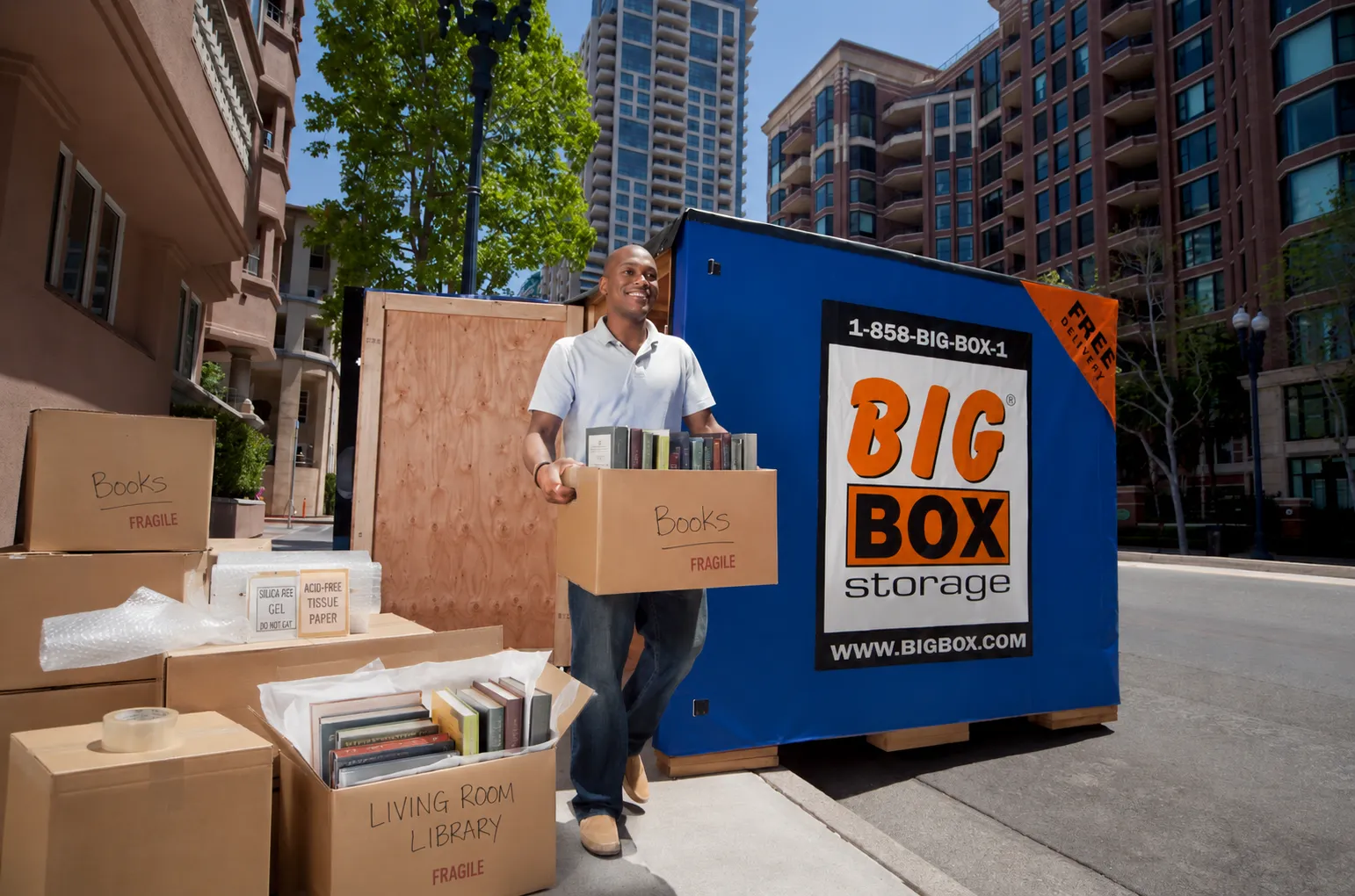
Big Box Storage is an ideal solution for book lovers who need reliable, accessible storage during a move. With clean, secure storage units and the flexibility to store your collection short or long-term, it removes the anxiety of stacking book boxes in a corner and hoping for the best. Whether it’s a few boxes of your regular reads or an entire rare collection waiting for its new home, Big Box Storage gives your books the environment they deserve while your move comes together.
Final Thought
Packing books well isn’t complicated – but it does require intention. Use small boxes, reinforce the bottoms, respect the weight limit, position spines correctly, and give your valuable editions the individual attention they need. Do that, and your collection will arrive exactly as it left: intact, organized, and ready to fill new shelves.
Your books traveled a long way to end up in your hands. A little care on moving day is the least you can do.