

Packing your kitchen can be one of the most difficult aspects of a move. The delicate nature of items such as dishes, glassware and heavy items like pots, appliances and pantry items make them very fragile.
By knowing how to pack your kitchen efficiently by knowing what to pack first and making sure you are using the right packing materials will help. Making sure you have your boxes organised by weight and fragility.
Whether you’re moving anywhere in the US or preparing your belongings for temporary storage, this step-by-step kitchen packing guide will help you protect your items, save time, and make unpacking easier.
What Kitchen Items Should You Pack First?
Start with kitchen items you rarely use and leave everyday essentials until the final day. The table below shows the recommended packing order.
| Packing Priority | Item Group | Items |
|---|---|---|
| 1. Pack first | Specialty & Seasonal Items | Holiday dinnerware, serving platters, cake stands, specialty baking tools, seasonal decorations |
| 2. Pack early | Bakeware | Baking trays, cake pans, muffin tins, mixing bowls, measuring tools |
| 3. Pack early | Small Kitchen Appliances | Blender, mixer, toaster, air fryer, food processor, coffee grinder |
| 4. Pack next | Cookware | Pots, pans, lids, skillets, strainers, cooking accessories |
| 5. Pack next | Dinnerware | Plates, bowls, serving dishes, mugs, saucers |
| 6. Pack carefully | Glassware & Fragile Items | Drinking glasses, wine glasses, glass jars, pitchers, ceramic items |
| 7. Pack close to moving day | Pantry Items | Canned food, dry groceries, spices, cooking oils, sauces, snacks |
| 8. Pack last | Cutlery & Utensils | Knives, forks, spoons, spatulas, ladles, peelers, tongs |
| 9. Pack last | Kitchen Essentials | Daily-use plates, cups, coffee supplies, dish soap, towels, basic cooking tools |
How to Pack Different Kitchen Items Safely
Before packing, gather sturdy moving boxes, packing paper, bubble wrap or reusable padding, packing tape, dividers, and permanent markers. Use smaller boxes for heavy items and well-padded boxes for fragile kitchenware.
1. Specialty and Seasonal Kitchen Items
- Clean and dry holiday dishes, serving trays, and specialty cooking tools before packing.
- Wrap decorative plates, cake stands, and fragile serving pieces individually with packing paper.
- Use dividers or extra cushioning for unusually shaped items.
- Fill empty spaces inside boxes to prevent movement.
- Label each box “Seasonal Kitchen Items” and mark fragile boxes clearly.
2. Bakeware
- Stack baking trays and cake pans by size, placing packing paper between them to prevent scratches.
- Wrap glass baking dishes individually with cushioning.
- Place mixing bowls inside one another only when they fit safely, with padding between each bowl.
- Store measuring cups and small baking tools in labeled bags or small containers.
- Avoid overloading boxes with heavy ceramic or cast-iron bakeware.
3. Small Kitchen Appliances
- Unplug, clean, and completely dry appliances before packing.
- Remove detachable blades, trays, bowls, and accessories, then wrap them separately.
- Secure electrical cords with reusable ties rather than wrapping them tightly around appliances.
- Use original packaging when available. Otherwise, choose sturdy boxes with enough cushioning.
- Protect sharp appliance attachments with blade guards or thick cardboard.
- Do not pack appliances while they are damp or still contain food residue.
4. Cookware: Pots, Pans, and Lids
- Arrange pots and pans by size and nest them when possible.
- Place packing paper or soft cloth between cookware to protect nonstick surfaces.
- Wrap glass lids separately and position them upright with cushioning.
- Protect handles and other parts that may bend or break.
- Pack heavy cast-iron pans in small, reinforced boxes.
- Fill empty spaces with packing paper to prevent shifting.
5. Dinnerware: Plates, Bowls, and Mugs
- Wrap every plate separately using several layers of packing paper.
- Place plates vertically on their edges inside well-padded dish boxes rather than stacking them flat.
- Wrap bowls individually and cushion them when nesting.
- Protect mug handles with additional padding.
- Fill the bottom, sides, and top of each box with cushioning.
- Mark boxes “FRAGILE” and “THIS SIDE UP” to guide handling.
6. Glassware and Fragile Kitchen Items
- Use cell-divided boxes for drinking glasses and stemware when possible.
- Wrap each glass individually and add extra protection around stems and handles.
- Fill hollow glasses with clean packing paper for added support.
- Place heavier glass items at the bottom and lighter items above, with adequate separation.
- Wrap pitchers, glass jars, and ceramic containers separately.
- Gently check each packed box for movement before sealing it.
7. Pantry Items: Food, Spices, and Cooking Oils
- Check expiration dates and discard expired food before moving.
- Pack sealed dry goods such as rice, pasta, and cereal in sturdy, leak-resistant containers.
- Group spices in small, sealed bags or containers to prevent spills.
- Keep canned foods in small boxes because they become heavy quickly.
- Place liquid containers in sealed bags and keep them upright during local transport.
- Avoid packing perishable, refrigerated, frozen, or opened food in a storage container.
- Check your moving or storage provider’s rules before including any food products.
8. Cutlery and Cooking Utensils
- Group forks, spoons, and similar utensils together using small organizers or wraps.
- Cover sharp knife blades with protective sleeves or rigid cardboard.
- Place knives inside a secure knife block or a clearly labeled protective container.
- Pack spatulas, ladles, peelers, and tongs together.
- Protect wooden utensils from moisture and excessive pressure.
- Avoid leaving sharp objects loose inside boxes.
9. Everyday Kitchen Essentials
- Set aside one or two plates, cups, and sets of utensils for each household member.
- Keep a small pot, pan, and basic cooking tools available until the last day.
- Pack dish soap, sponges, and cleaning supplies separately, following transportation restrictions.
- Prepare a clearly labeled “OPEN FIRST: KITCHEN” box.
- Include coffee or tea supplies, paper towels, and other essentials needed immediately after moving.
- Keep this box accessible instead of burying it behind other belongings.
How to Load Kitchen Boxes Into a Portable Storage Container
Packing kitchen boxes correctly is only half the job. Loading them properly into a portable storage container is equally important for preventing damage during transportation.
Step 1: Create a stable base
Place heavy, sturdy boxes containing pots, pans, and canned goods near the bottom. Spread weight evenly across the container floor.
Step 2: Protect fragile boxes
Keep dishes, glassware, and ceramic items upright and cushioned. Do not place heavy boxes on top of them.
Step 3: Prevent movement
Fill gaps with soft packing materials, moving blankets, or other secure items. Use approved tie-down points and straps to prevent shifting.
Additional Loading Tips
- Distribute heavy kitchen boxes across the floor rather than concentrating them in one corner.
- Build stable layers with heavier boxes underneath lighter boxes. Avoid stacking fragile boxes beneath furniture or large appliances.
- Keep boxes away from objects with sharp edges.
- Do not overload the container or exceed its stated weight limit.
- Load boxes containing frequently needed items last so they can be accessed first.
- Keep food, cleaning chemicals, and other restricted items out of the container according to your provider’s guidelines.
Make Your Kitchen Move Easier with Big Box Storage in San Diego
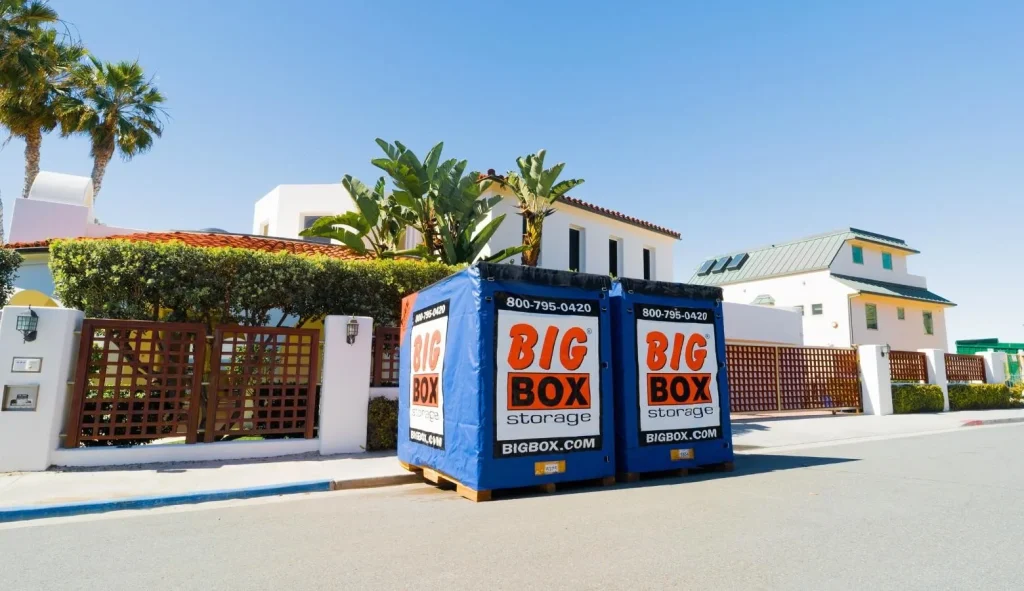
Efficiently packing your kitchen can be a lengthy process. However, Big Box Storage provides affordable portable storage units for those living in San Diego.
Established in 2003, Big Box Storage have helped thousands of customers throughout San Diego County by making it easier to move, renovate and store items.
How Big Box Storage Works
- We Deliver: Big Box Storage delivers portable wooden storage containers directly to your San Diego location.
- You Pack: Load your kitchen boxes, furniture, and other household belongings at your own pace.
- We Store: Keep the container at your location or have Big Box Storage pick it up and store it at its secure facility.
For Outer state Moving: If you’re moving outside San Diego, Big Box Storage can arrange shipping to many metropolitan areas across the United States.
Each Big Box measures approximately 8 feet long, 5 feet wide, and 7 feet high externally, providing around 40 square feet of storage floor space. You can order multiple containers and pay only for the ones you use.
How Much Does Big Box Storage Cost?
The current online booking page lists a standard monthly rate $99 fee for short-term rentals and $89 12-month rate. Also, a free initial delivery and pickup with a qualifying three-month minimum term in the standard service area. Confirm your exact rate and eligibility before booking.
Get A Free Big Box Storage Quote Now
Awards and Recognition

Big Box Storage has been voted San Diego’s Best Storage Company for five consecutive years, from 2020 through 2024, according to the company’s website.
With more than 70,000 deliveries since 2003, Big Box Storage has built a strong local presence by offering flexible, convenient storage solutions.
For San Diego residents packing a kitchen or an entire home, Big Box Storage provides an alternative to renting a moving truck and transporting belongings to a traditional self-storage facility.
Checklist For Easy to pack Your Kitchen
Download our free, printable Kitchen Packing Checklist to keep track of everything from cookware and dishes to pantry essentials.
Download Free Kitchen Packing Checklist (PDF)
Conclusion
Know how to properly pack your kitchen so that you don’t break any of your dishes, damage your appliances, or cause yourself unnecessary stress.
Start by putting away seasonal items and rarely used cookware. Make sure your delicate dishes and glassware are packed properly. Finally make sure that you have everyday items to hand. When packing into your portable storage container make sure heavy boxes are at the bottom, fragile items are well protected, and everything is secured.
Big Box Storage makes packing up, loading and storing your items easy if you’re moving within San Diego or from San Diego.
Ready to make your next move easier? Visit Big Box Storage or call (858) 244-2691 to explore portable storage options.
Frequently Asked Questions About Packing a Kitchen for Moving
How many moving boxes do I need to pack an average kitchen?
A typical kitchen may require approximately 15 to 30 boxes, depending on the number of cabinets, appliances, and household members. Larger kitchens with extensive cookware and dinnerware collections may need more.
Should I buy special dish-packing boxes or use regular moving boxes?
Both options can work, but specialized dish boxes typically offer stronger construction and better protection for fragile items. Regular moving boxes can be suitable when reinforced and packed with sufficient cushioning.
Can I use towels and clothing instead of bubble wrap to protect kitchen items?
Yes. Clean towels, dishcloths, and soft clothing can cushion many kitchen items and reduce packing material costs. However, highly fragile glassware and delicate ceramics may still benefit from individual wrapping and protective dividers.
Should I photograph my kitchen items before packing?
Taking photos of valuable kitchenware, appliance connections, and organized cabinets can make unpacking easier. Photos may also help document the condition of expensive items before transportation.