
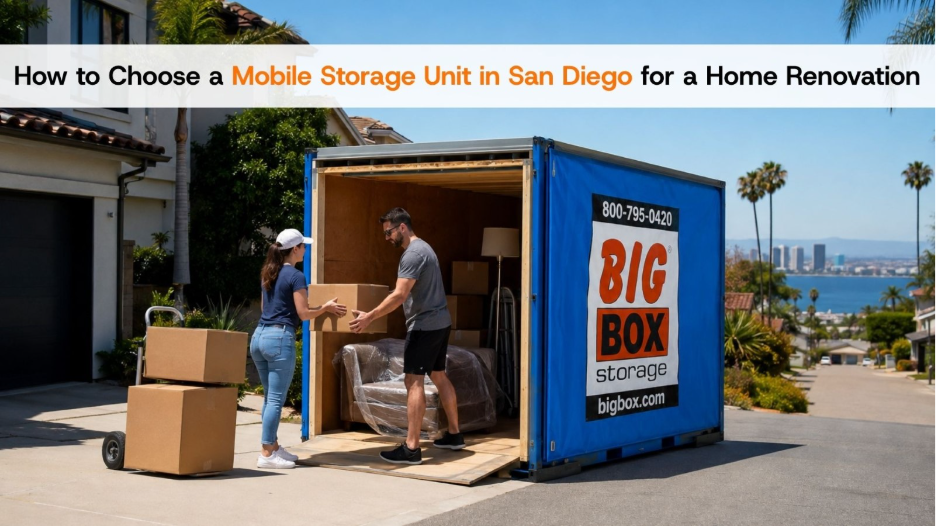
Quick answer: For a San Diego renovation, pick a mobile storage container based on how much of your home is affected (one box per room is a safe starting point), whether wood or metal fits your climate needs, and whether you’ll keep it in the driveway or send it to a facility. Compare flat delivery fees, not just monthly rates, since that’s where costs tend to hide.
If you’ve ever tried to gut a kitchen with furniture still crammed into the hallway, you already know why people rent mobile storage units in San Diego before the sledgehammers come out. A contractor needs floor space to work. You need your couch somewhere that isn’t a tarp in the backyard. Mobile storage containers solve that problem by showing up at your address instead of making you drive a truck across town.
But not every container, or every company, works the same way. Here’s what actually matters when you’re picking one for a renovation, not just a move.
Why Renovators Reach for Mobile Storage in the First Place
A moving truck is built for one trip. A mobile residential storage container is built to sit there. That difference matters more than people expect once a project runs long, which renovations almost always do.
With mobile storage, the unit gets dropped at your home, you load it at whatever pace the project allows, and then you decide what happens next. Keep it on-site for quick access to tools and materials. Or have it hauled off to a facility if you need the driveway clear for contractor trucks and dumpsters.
That flexibility is the whole point. Renovations rarely go on a fixed schedule. Storage that adapts to delays is worth more than storage that’s just cheap.
What to Look for in a Mobile Storage Container
Size: How Many Boxes You Actually Need
Most mobile storage companies size their units by the room, not the square foot, which makes planning easier than it sounds. A single Big Box unit, for example, runs about 8 feet by 5 feet by 7 feet and holds roughly one room’s worth of belongings.
For a kitchen or bathroom remodel, one or two units usually covers it. Whole-house renovations can run four or more. If you’re not sure, ask whoever you’re renting from for a space estimate rather than guessing. Underestimating means a second delivery mid-project, which nobody wants when contractors are already on-site.
Wood vs. Metal Construction
This one gets skipped more than it should. Wood containers naturally insulate against temperature swings and manage humidity better than metal, which matters if you’re storing furniture, electronics, or anything with a finish that can warp. Metal containers can sweat inside when San Diego’s coastal humidity shifts, and that moisture doesn’t do your grandmother’s dresser any favors.
Wood also tends to be gentler on surfaces during loading. No sharp metal edges catching a couch cushion on the way in.
On-Site or Off-Site Storage
Ask yourself honestly how much workspace the crew needs. If your driveway or side yard can spare the footprint, keeping the container on-site means you can grab a tool or a box of tile samples without calling anyone. If space is tight (and in a lot of San Diego neighborhoods, it is), sending the unit to a secure facility frees up the property entirely.
Some companies will let you switch mid-project. That’s worth asking about before you sign anything, since renovation needs to shift as walls come down and new problems show up.
Pricing Structure
This is where people are surprised. A “$99/month” headline rate means very little if delivery and pickup fees stack on top separately. Look for the total cost of a round-trip delivery, not just the storage rate, and ask whether long-term commitments (say, four months or more) waive the delivery fee entirely. Many San Diego providers do exactly that, since it rewards the customers who were going to stick around anyway.

Timing Your Delivery Around the Renovation Schedule
Renovation timelines slip. Permits get delayed, tile backorders happen, your contractor’s other job runs long. Book delivery a few days before demo starts, not the morning of, so you’re not scrambling to clear rooms while a truck idles outside.
The same goes for pickup. Don’t schedule it for the day the project is “supposed” to end. Give yourself a buffer, because the last week of any remodel is never the week you planned for.
Local Factors That Matter in San Diego
Space is the recurring theme across San Diego’s older neighborhoods, from Bay Park to North Park to parts of Point Loma. Narrow driveways and tight lot lines mean a delivery truck needs real clearance to place a container without blocking the street or a neighbor’s gate.
Check your HOA rules too, if you have one. Some communities restrict how long a storage container can sit visible from the street, which pushes you toward the facility storage option even if you’d rather keep everything close.
And if your renovation is weather-dependent (a roof job, an exterior paint project), remember that San Diego’s dry season isn’t a guarantee. A wood container’s humidity resistance earns its keep during the rare wet stretch just as much as during a heat wave.
Questions to Ask Before You Book
- What is the full delivery and pickup cost, not just the monthly rate?
- Is the container wood or metal, and how does that hold up to San Diego’s coastal air?
- Can I switch between on-site and facility storage if my plans change?
- How much notice do you need for delivery, and how much for pickup?
- What happens if my renovation runs longer than expected?
Ask a company these five questions before you commit, and you’ll avoid most of the surprises that turn a simple storage rental into another headache on top of the renovation itself.
Frequently Asked Questions
1. How many mobile storage units do I need for a home renovation?
It depends on how much of the house is affected. A single room typically fits in one unit sized around 8′ x 5′ x 7′. A full-house remodel often needs four or more. A storage space estimator or a quick call with the provider can narrow that down before delivery day.
2. Is it cheaper to keep a storage container on-site or at a facility?
Pricing usually runs the same either way since you’re paying for the container itself, not the location. The real cost driver is delivery and pickup, so on-site storage that avoids an extra trip can end up cheaper if you don’t need the unit to move again.
3. How far in advance should I book mobile storage for a renovation?
Book at least a week before demo day if you can, especially during busy renovation seasons in spring and summer. Same-day or next-day delivery is sometimes possible, but availability depends on the provider’s schedule and your zip code.
4. Can I access my belongings while the storage container is at my house?
Yes, that’s one of the main advantages of on-site storage. You can open it whenever you need a tool, a box of samples, or anything else without calling ahead. Facility storage usually requires advance notice for access.
5. What size storage container is best for a kitchen remodel?
One or two containers are typical for a kitchen remodel, depending on how much furniture, appliances, and cabinetry need to move out. If you’re storing large appliances, measure them against the container’s interior dimensions first since exterior sizing doesn’t always tell the full story.